FEATURE: Evan Wheeler

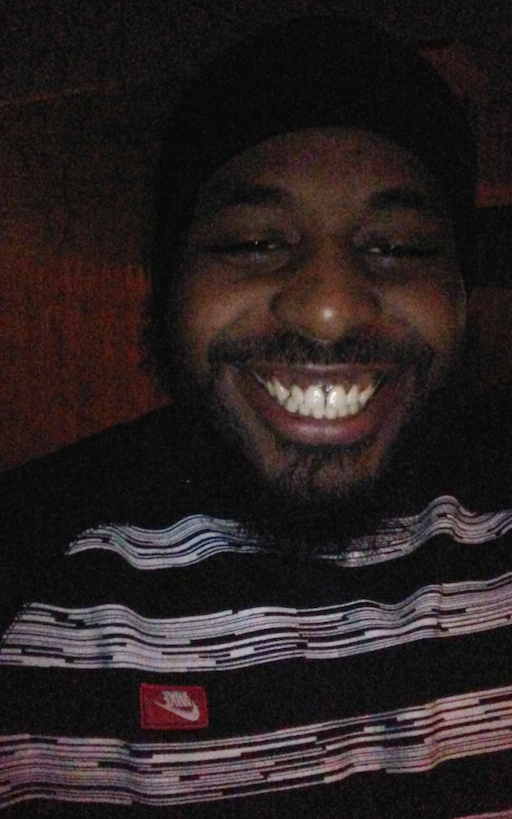
My name is Evan Wheeler I'm a very determined vegan who is a personal trainer, activist, athlete, mentor, life coach, and motivational speaker. I was born and raised in Camden, New Jersey, one of the most dangerous inner city urban areas in America. I rarely saw gardens growing up and the freshest vegetables I ever had were out of cans, but as I grew up to become an athlete, I began to take an interest in nutrition.

My journey began with cutting out pork, beef, and dairy products at the young age of 19  where I started to notice a rise in energy, an immune system boost, and better athletic performance. The next stages of my life led me to be a collegiate sprinter and captain of the University of Tampa track team, as well as a journalist. I started doing research on veganism and naturalism for the next 5 years.

My vegan journey began about 8 months ago and is still going strong. With each and every day that passes, I feel one with the earth where I'm returning my body to it's natural order of living. I wanted to become one with the earth by detoxing my body from these false beliefs that you need to kill and eat flesh to survive and become strong in life. Each day I defy the stereotype that only white people can successfully be vegan and successfully stay vegan long term, I was a 2016 Rio Olympic hopeful but unfortunately, I failed to qualify and make the team with so many other great athletes competing, but I would like to share my story hopefully to inspire others to embark on the vegan journey. 

FEATURE: Keachia M. Bowers

Vegetarian becomes Vegan: A Spiritual Unfolding

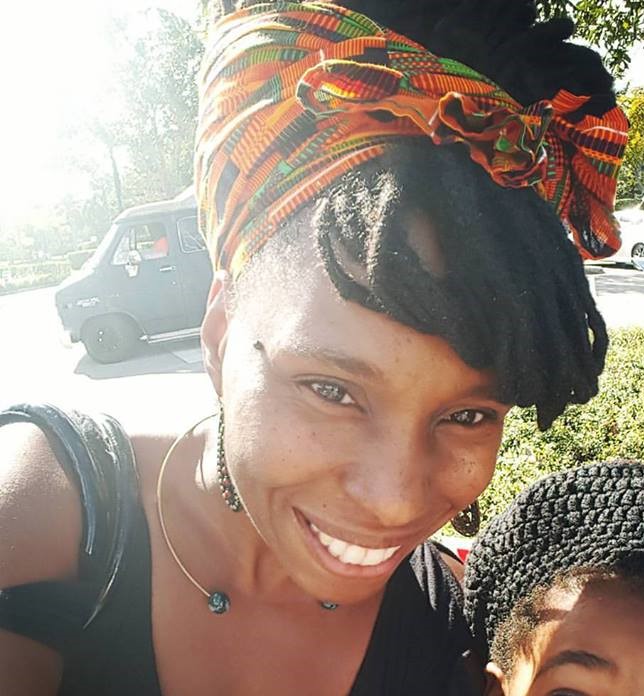
My journey towards veganism was birthed as a by-product of healing transformation.  It was inevitable.  I began to unfold and discover myself spiritually, mentally, emotionally and physically.  However, things felt really incomplete.  After a full assessment of my lifestyle and the food I was eating, I realized that I was living a life for the past 19 years as a dead vegetarian.

Yes, I said it...dead.  I was physically living, but I was self-destructive in so many ways.  Much of my emotional pain from my childhood was brought into my adulthood and it shaped the way I was eating.  I was, what I like to call, an “emotional eater”.  So, when I felt inadequate and empty, I got some pound cake.  When I felt like life didn’t give me what I deserved, I treated myself to a slice of pizza.  It was full of veggies though, so I thought I was “better than” the rest.  If I wanted to cry, I didn’t allow it to happen.  I covered it up, pushed it down and ate whatever I wanted to eat; as long as it was fish, processed foods, and a bunch of other foods packed with eggs and milk…yup, cows milk.

Now, I’m not saying that anything is wrong with eating these foods.  NO. Not my claim.  I’m saying that once I awakened into finding my true self, my divine and radiant self, these foods could no longer serve me.  So, the battle began.  A true, internal battle of my inner self fighting with my outer self for liberation.  I became conscious and aware of how I victimized myself, self-sabotaged, suppressed anger, manipulated others, and a host of low vibrational thoughts and actions.  The awareness sparked change.  I began to pay attention to how I spoke to myself when I was alone.  How I spoke to others and more importantly, what I ate.
With this transformative state, I can honestly say that my journey towards veganism then became a radical and revolutionary act of self-love. Kindness, to the highest degree.  After years of standing in darkness, I finally allowed room for light to shine.  And it all came from within.  

What did the transformation offer me and the world around me? I developed a private practice as a healing counselor and Transformation Coach, Movements for Change, LLC in the South Florida area.  I began presenting a wellness workshop in my community, Vegetarian 101: Transitioning to a Healthy Lifestyle. I began motivational speaking in my community.  I began to rebuild healthy relationships, beginning with the one I had with myself.  And more importantly, I began to forgive myself for not knowing.  

Today, I tell myself and everyone around me…”Whenever I see my low vibrational self, I give her a hug and an apple...”

Social Media

Facebook: Movements for Change

Instagram: @Movements_for_change

Facebook: Vegan Recipe Exchange

Jamall Troupe aka Veganz N Da Hood

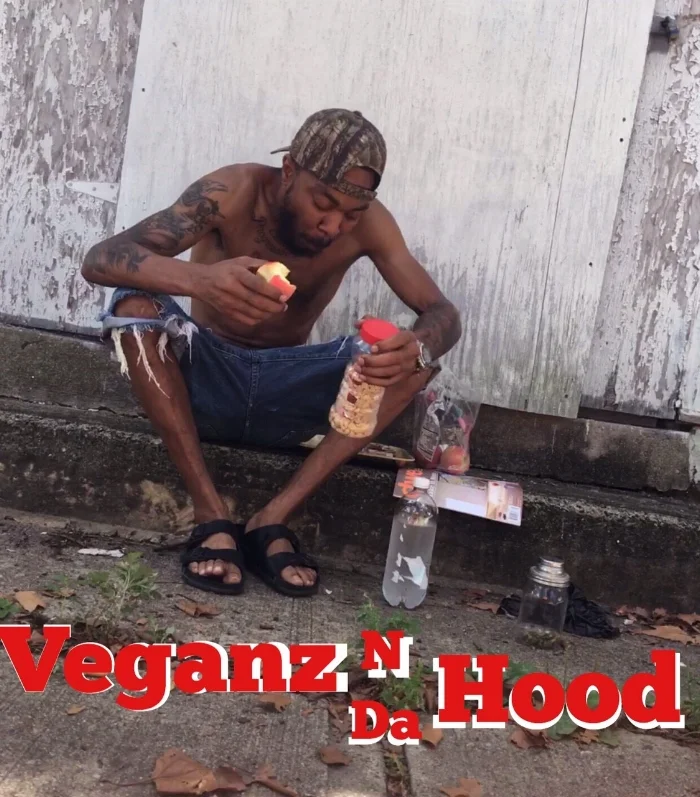
So, I grew up in a co-parenting situation. My mother was a city girl with southern roots, and my father was a city guy with same roots but had a more esoteric lifestyle and outlook on life. I grew up bi-household, and living with my father, or "staying" with him throughout my childhood, I was exposed to veganism at a very early age. When you're a child, you see this strict diet as punishment and in the early years I couldn't wait to get back to my moms residence to eat junk...in a nutshell. 

I became very aware of the different flavors and cultures I was being exposed to via my dad, whether it was eating middle-eastern or Indian, or just his girlfriend/wife's cooking that was just very different from what I was doing at my mom's house. A proclaimed "VeggieFruitarian", my father was vegan from the 70's who promoted animal rights and love for all the universe provides us with. My father was an activist in his own right who was very prolific in his writing skills. He had two more sons after me Tafari and Valtungie that grew up in his household. So, after going to college, and being able to live on my own and bounce around the country, I ultimately adopted a vegan lifestyle which was an easy transition for me and my family.

I've been vegan over 5 years. I was vegetarian/Pescatarian for 7. My son Hendrix was born vegan and he is 4. Animal rights means a lot to me, and I try to volunteer at rescues as much as possible. What's very important to me is reform, and teaching kids about sustainability, ethical animal rights, and eco, plant-based nutrition.  I hope this gives you a better idea as to what Veganz N Da Hood's focus is. We would like to change the way people consume food in the urban community through education. Veganism is not an elitist white person diet, as whole foods are attainable, affordable and necessary for our communities to flourish. 

Social Media

Twitter: @JayTroupe  
IG: @VeganzNDaHood
SnapChat: @VeganzNDaHood

FEATURE: Taryn Graham

My name is Taryn Graham, and I am a black vegan. I have been vegan for a few months now and I am so glad that I am. I became vegan after being diagnosed with Hashimotos Thyroiditis late last year. After I went vegan I got my blood tested and it showed that my thyroid levels were perfectly normal.

Now, I am preparing to launch my blog that talks about living a healthy vegan life while having a chronic illness. Although I became vegan after being diagnosed with an illness, veganism means more to me than health. It means supporting equality for all. Including the animals and the environment. I believe that when people go vegan they learn to have compassion for all beings. That means not only do we not harm animals, but we also learn how to treat each other better. 

As more people become vegan that means that more people will be leading healthier lives. However, not everyone can afford to lead a life that consists of eating more fruits vegetables. 

That is why it is so important that more African Americans become vegan. We have to speak out about the food injustices that take place in our communities so that we can have better access to healthy foods. 

FEATURE: Malcolm Barnes

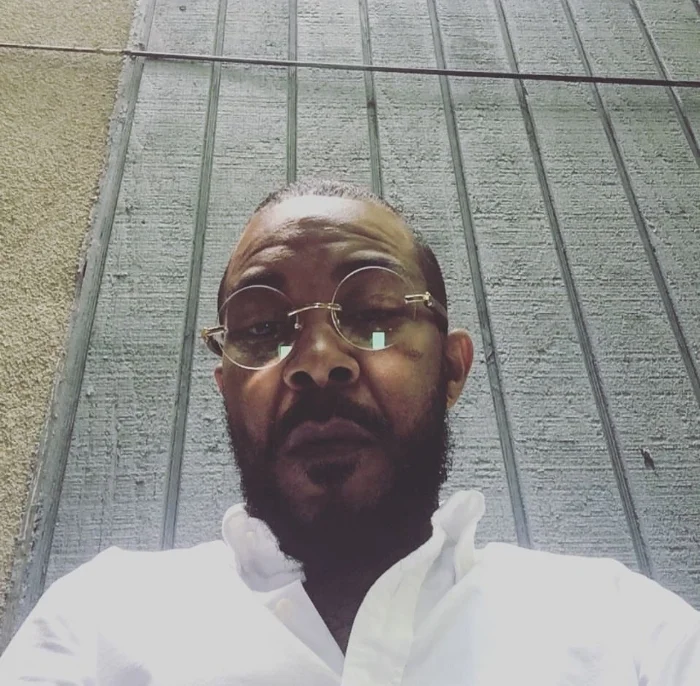
My name is Malcolm Barnes. I'm 25 years young and I’m a relatively new vegan of about seven months as of the first week of January 2016. I got out of the national guard in 2014 knowing full well that I needed to make a change, so I researched for two years about men like Dr. Sebi and the alkaline lifestyle, more about our culture and how I needed to start taking meat out from my life. I learned after leaving that my body was breaking down from over 30+ allergies to almost everything around me,  and then I found out about the vegan community, and how predominantly European it is. So @alphablack_veganmen on Instagram was born.

I found over a hundred other black vegan men within the first few weeks that the rest of the mainstream vegan community was apparently not promoting, and now I'm building from there while not contributing to eating animals or letting other people drown out our voices. There is such a massive wave of blatant racism within the vegan movement, and I refuse to let it go unchecked. I made a similar page for the women later on called @melenated.vegangoddesses so that I could promote both.

Now I'm trying to build my YouTube channel Plantbased EmpireTV and hoping to show more of the black community that we exist and are more than powerful enough to do amazing things.  Elevating the African community and doing stuff like a promotion for free has been a staple, but naturally, I need to do more. I'm hoping to expand this further than anyone has done before.

Social Media

Facebook: https://www.facebook.com/Alphablackveganmen/
Instagram: @alphaback_veganmen 
Tumblr: http://alphablackvegan.tumblr.com/
Twitter : @plantempire
Facebook: https://www.facebook.com/melenatedvegangoddesses/
Instagram: @melenated.vegangoddesses 
Tumblr: http://melenatedvegangoddesses.tumblr.com/

FEATURE: Delisile Godeffroy-Taylor

My journey towards becoming vegan started over 10 years ago, even though I did not realize it at the time. I started having problems with stomach discomfort and pain. An ultrasound revealed I had gallstones. I was told to get ready for surgery, but after researching life after gallbladder surgery I decided to try a diet change instead. Fatty foods triggered my attacks so I cut out all fatty foods and became even more diligent about only eating home cooked whole foods. During my consultation, the surgeon guaranteed me that no one can maintain a low fat diet and that I would be back within a year. I have not seen him since. The interesting thing was I didn’t even need to keep an intense super low fat diet. I just eliminated processed fatty foods. For example eating an avocado? No gallbladder attack. Eating a slice of diner store pizza? Agony. 

Unfortunately my stomach issues were not the only thing I was struggling with. I live with depression, bipolar, and OCD, and I struggle with compulsive binge eating. So while I did okay for a while with my whole foods home cooked diet, at some point, I stopped taking my meds (I make bad decisions sometimes). I was fine for a while and then I fell into a three year bout of severe depression. I lost my job, and it left my body way out if it’s weight comfort zone because I was getting zero exercise, and in constant pain. 

I remember the exact moment I realized I needed to do something about my health. I was taking a shower and I was out of breath from just from the exertion of washing my own body. Suddenly I felt light-headed and nauseous and thought I was going to pass out. I turned off the shower and dragged myself to my bed and collapsed there, dizzy and panting. I had one clear thought in that moment: if I did not do something about my health I was going to die.

I made a promise to myself many years ago that no matter how dark things got for me with my mental health, suicide was not an option. I had to be there for my son. That was a powerful motivator and it kept me alive on many occasions when I just wanted out. However, I realized that what I was doing to my health was just a slower form of suicide. I went to my doctor that week and got back on medication. The first thing to go when I take my meds is my compulsive binge eating. So with just that one simple step I was already feeling better. Next I cut out the processed foods and gluten (which I had slipped back into the habit of consuming regularly). I felt even better. 

Even though for the most part I had eliminated all my bowel issues by this point, I had, not surprisingly, become obsessed with how diet impacted health. The more I researched the more I was convinced that going vegan was the best choice for me and my son. Sometime around mid-2014, I made the choice to go vegan. It was a surprisingly easy change for both me and my son. I think most of that had to do with the fact that our diet was already almost exclusively home cooked and whole food. Cutting out meat and dairy barely phased us. There was a little bit of a learning curve on the home baked goods though, but I got that on lock now. 

Even though I had eliminated my most noticeable stomach issues, I found that when I was vegan my stomach felt even better. It’s hard to describe but it is sort of a clean comfortable internal feeling that I never had before but now wonder how I lived without it. Another unexpected side effect of going whole food vegan was my that son’s migraines completely went away. He used to suffer severe, throwing up, light sensitive, body shakes migraines (ever since the 1st or 2nd grade) on a regular basis. Since going vegan he has had, at most, 3 migraines in the the past 4 or 5 years.

Over the years, I have gravitated from being a purely health choice vegan to being an ethical vegan. It felt like an organic transition and that is where I am at now: voluntary vegan and reluctantly gluten-free. I am also in the final stages of editing and design for my vegan, gluten free cookbook, Love Letter to My Son in 40 Recipes: Vegan, gluten-free, whole-food cooking, with a Southern African Flair. Anyone who wants to show some support or preorder a copy can get details at: https://www.gofundme.com/LoveLetterToMySon

Follow me on Instagram (@DZGTaylor) and Twitter (@DelisileGTaylor) for daily posts about my cooking adventures, cookbook progress, and general foolishness.

 

FEATURE: Jasmine C. Leyva

For me the most empowering aspect of adulthood is being able to shape and mold my former self—the girl that lived by the code of her circumstances—into a conscious woman that creates her own constitution. Food, naturally, plays an integral role in this shaping. I grew up eating what was given to me; I ate what everyone around me ate without question. But upon moving to Los Angeles, I met a beautiful black female vegan in her sixties. She was much different from the sixty-year-olds to which I had become accustom.  Her skin was flawless, she appeared to be in perfect health, and her sixty-year-old body frame surpassed my own in fitness—and I was just twenty at the time.  Unlike so many of “us” who are readily dismissive of the unfamiliar, I was willing to give her vegan lifestyle a try.

Within just a few weeks of abstaining from meat and dairy, the acne that plagued me had subsided, my energy levels went up, and all across the board, I felt better. Back then, I had the mentality of a young girl; thus most of my reasons for pursuing a plant-based lifestyle were cosmetic and self-serving.  Now, as a woman, my dietary choices are motivated by my values and ethical convictions.

Growing up in Washington DC, there were several pervasive archetypes I was supposed to look up to and take as inspiration, among them: “the strong black woman,” “the educated black woman,” and “the hard working black woman”  The “compassionate black woman” as a figure utterly opposed to the suffering of both living beings and the planet was virtually non-existent. I also don't remember seeing much of the “food conscious black woman,” someone whose vision extended beyond the normative, convenient, and cheapest of foods, to celebrate quality food as a hallmark of health and wellness.  I imagined that these women existed, but they always felt few and far between, that is, they seemed invisible in my community.

My documentary, The Invisible Vegan, is therefore my attempt to remedy this problem. It is my attempt to try to decrease the number of people, especially my people, from dying of preventative diseases.  It is my attempt to give people like me, the examples and relatable messengers I wish I had. It is my attempt to inspire different audiences, not necessarily to convert them into vegans, but to help them understand the reasons behind plant-based eating. This in turn, I hope, will enable viewers to make educated choices based on different perspectives—rather than blindly accepting points of view because they’ve been handed down to them. This is the ultimate goal of the project.

Social Media

Twitter: @jasmine_c_leyva
Instagram: jasmine_c_leyva
Facebook: Jasmine C. Leyva

Latest Teaser: https://youtu.be/ZN4BhesG8XQ


FEATURE: Liz Ross

Liz Ross is the founder of Coalition of Vegan Activists of Color (COVAC), which partners with individuals and community organizations to mobilize vegan and animal rights activists of color to provide motivation and exchange information by conducting workshops, conferences, social networking events and volunteer events. 

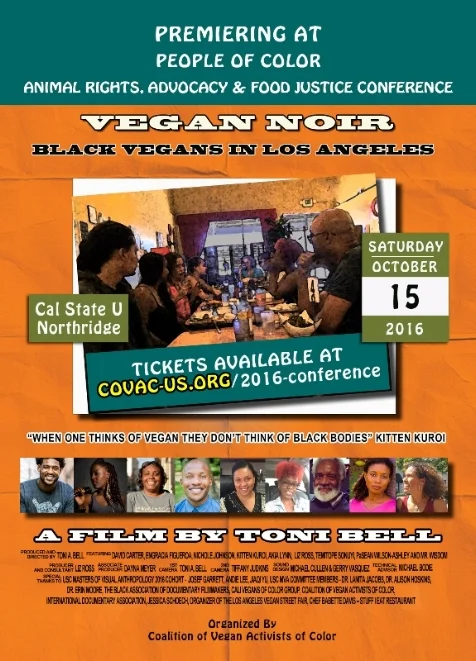
 COVAC is organizing its 2016 People of Color: Animal Rights, Advocacy and Food Justice Conference, which will take place in Los Angeles, California, on October 15, 2016.  This conference is the first of its kind in Southern California.  Attendees will share a space with activists and leaders of color who engage in vegan outreach, animal rights, vegan health and fitness, vegan food justice, urban farming, migrant worker rights in the U.S. food system, vegan hip hop projects, and much more.  Click HERE for more information.

Liz is an active member of Black Skeptics Los Angeles (BSLA), which is committed to community building and promoting social justice work through a secular humanist perspective.  Each year, BSLA spearheads its “First In The Family Scholarship Fund”, which provides financial resources to undocumented, foster care, homeless, system-involved, and LGBTQ youth of color to help them with their college expenses. 

A former police officer, Liz raises awareness about the history and problem of mass-incarceration through presentations, and volunteering for organizations, including A New Way of Life: Reentry Project, that are working to counter its negative impact. 

Liz has given presentations on “The Origins of the Criminalization of Blackness in the Post Emancipation Period and How it Helped Shape Policing Policies”,  and “The Politics of the ‘War on Drugs’ and It’s Affects on Predominantly Black & Brown Communities”.  Liz also facilitates discussion groups on Michelle Alexander’s book, The New Jim Crow: Mass Incarceration in the Age of Colorblindness.

Liz currently serves on the advisory board of Food Empowerment Project, a vegan food justice organization. In addition, Liz provides a space for vegans of color who live and visit California to connect, and organize social and volunteer events through her Facebook Group page, Cali Vegans of Color.  

Liz is featured in the upcoming documentary film Vegan Noir: Black Vegans in Los Angeles, which she also helped produce and served as consultant.  Vegan Noir profiles nine Black vegans in Los Angeles. It will premiere at the People of Color Animal Rights, Advocacy and Food Justice Conference on October 15, and at independent film events this fall.  Produced and directed by Toni Bell, this film is in production at the University of Southern California Master of Arts in Visual Anthropology program.

Born and raised on the island of Trinidad, Liz moved to the U.S. in her early twenties. Liz has been an ethical vegan for over seven years, is passionate about learning agro-ecology, and enjoys running half-marathons.

Social Media


http://www.covac-us.org/
http://www.covac-us.org/2016-conference/ 

Instagram: https://www.instagram.com/covacvegansofcolor/