FEATURE: Risa

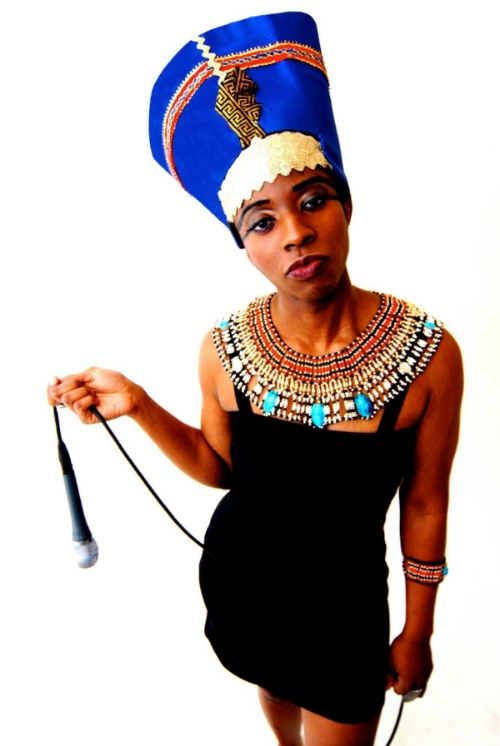
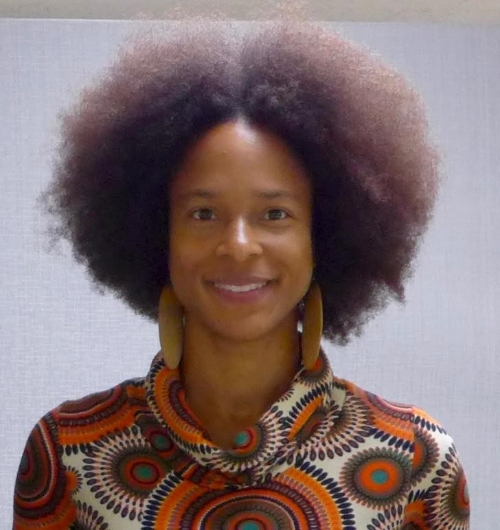
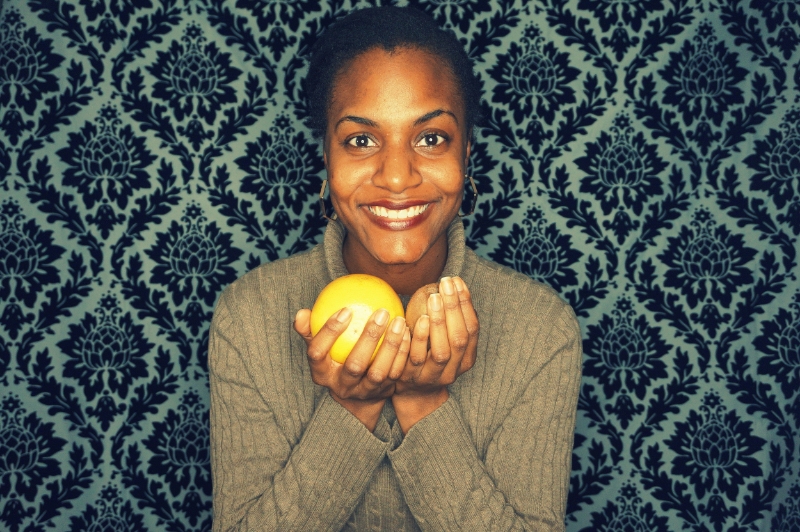
I'm Risa, a holistic healer and a jazz and blues singer currently based in New York City. I'm passionate about the rights of other species, and I've been a vegan--and an advocate for veganism--for 16 years.

This is meant to be short-ish, but if you want more, I told the complete story of how I came first to vegetarianism and then to veganism and activism in a chapter of the book Speaking Up for Animals: An Anthology of Women's Voices.

Veganism is far from "just a diet" to me; it has affected the interests and activities I've chosen throughout my life. While I'm no longer working in food service, I've held several jobs at vegan restaurants, working alongside foodies who delight in delicious plant-based eating as much as I do. I'm also a former nonprofit professional for animal rights organizations that work to protect animals and promote veganism.

As a Reiki Master, I've taught my students of energy work that the frequencies of death and oppression are incompatible with living a high-vibration lifestyle, and I encourage them to be as compassionate about other species as they are about healing and helping people. To be of service is a holistic and worthy endeavor, and I think veganism is a spectacular way to be of service to the earth, to animals, and even to our bodies! So many lives saved. In addition to my healing work with humans, I've been privileged to practice Reiki on animal companion clients--cats and dogs. That's so much fun! They're some of my most appreciative clients!

I was previously featured in a web documentary, I'm Vegan, which has over 10,000 views on YouTube. This video looks at my animal rights song "Strange Fruit," an homage to Billie Holiday's song of the same name, and which has been covered internationally. Here's the music video for my song:

Of course as a singer I've made no secret about my belief in animal rights and in the need for animal liberation, societal change, and the proliferation of VEGAN. My debut album on which "Strange Fruit" appeared also featured information about veganism in its liner notes. I'm proud of fashioning myself as a vegan performer with style, and proving we don't need leather, wool and fur to look good, even on stage! You won't spot me sporting the spoils of animal suffering; that's not a good look. I love when other artists are vocal about the benefits of veganism. One example is stic.man from Dead Prez! He's put out some good stuff.

I'm working on my second album now. It's less political than my first but it's a polished jazz and blues recording with a big band. It was funded in part by a successful Kickstarter campaign, and it's due out in 2016. I'm very excited! Keep in touch!

LINKS

Facebook: https://www.facebook.com/risabranch

http://risa.bandcamp.com/

FEATURE: Stephanie Duncker

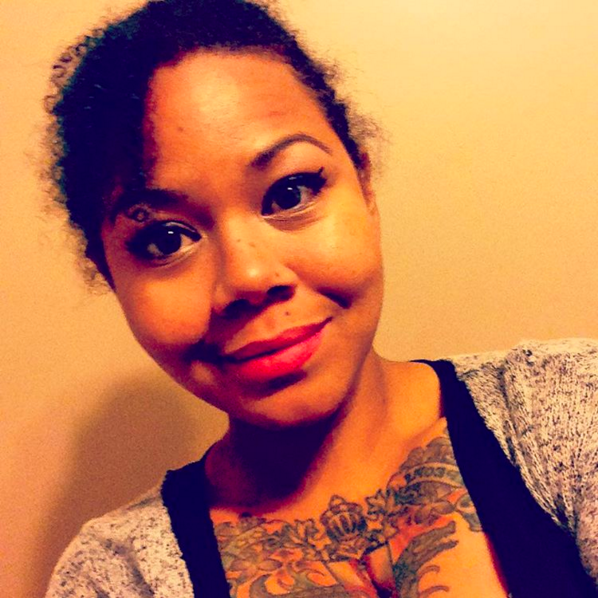
I've been vegan for over 4 years. One reason I was excited to move to Portland Oregon was because I heard it was a vegan haven, but I soon found that for a place that prided itself on being "weird" it seemed (to me at least) fairly homogeneous. 

For many, Portland's lack of diversity is a punchline, but for those of us who live here it can be a depressing reality. This is especially apparent in the tech scene here. For that reason, I created a networking group run for/by underrepresented people in tech called PDXNALTA. When I first created it, it was just because I wanted to meet other people like me, mainly black people in tech- I had no idea the effect it would have on my career. Now, as a result of starting this group and immersing myself in the startup scene- I'll soon be starting as the Program Manager for the Startup PDX Challenge

As a young anti-capitalist activist I never would have imagined myself working in the startup world, but thinking about my values now- it makes perfect sense. Technology is a powerful tool for social change, and this has never been more evident than with startups. "Disruption" is not just a silly startup buzzword- it describes a process wherein small companies with limited resources can bootstrap their way to success, leading to the demise of huge companies and sometimes even whole industries. 

Not only do I see this disruption with startups, I see this in the work of intersectional activists, whether they are a part of the Black Lives Matter movement or working for food justice in the hood.

I have a lot of hope for society because there is so much innovation going on- to the point where meat producers are investing in vegan startups, because even they know that animal agriculture is not sustainable, and veganism is the way of the future. 

I'm really happy to be working with the Startup PDX challenge, because I get a chance to work with so many incredible underrepresented founders. Rather than Mark Zuckerberg types, using their privilege to invent the next big time waster, I'm working with people using their different perspectives to think up unique solutions to today's pressing problems. I'm excited to help them grow in a way that's sustainable and uplifts the community around them, unlike the traditional parasitic model of capitalism that swallows up and destroys everything in its path.

At the same time, I know we have a long way to go, especially in Portland. Rising costs of housing, economic disparities, and problems in representation still abound, so there's still much work to do. But we vegans are persistent, so you know I'm up for the challenge! :)

You can follow what I'm up to on my twitter @dunx, or my blog: dunx.co. You can also visit here to support my code learning journey.

FEATURE: Zachary Toliver

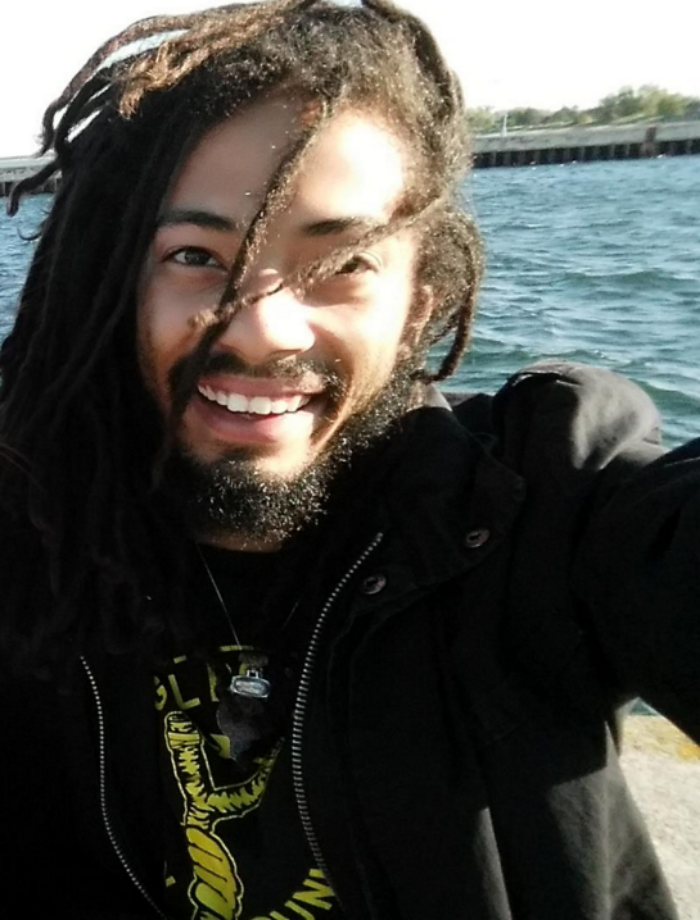
My pops told me that when I was a toddler, the realization that "fried chicken" was in fact an actual chicken disturbed me so much that I snuck off to flush the uneaten flesh down the toilet. Apparently, I failed to comprehend that all meat at one point walked around hyped on life before being murdered for McNuggets. I can only guess lil' me assumed meat grew silently rooted in the ground like vegetables or fruit. I like to think of this tale as a premonition to an inevitable vegan lifestyle. 

Regardless, nearly 20 years slipped by until a ruthless thunderstorm and anxious dog set me on the vegan path. 

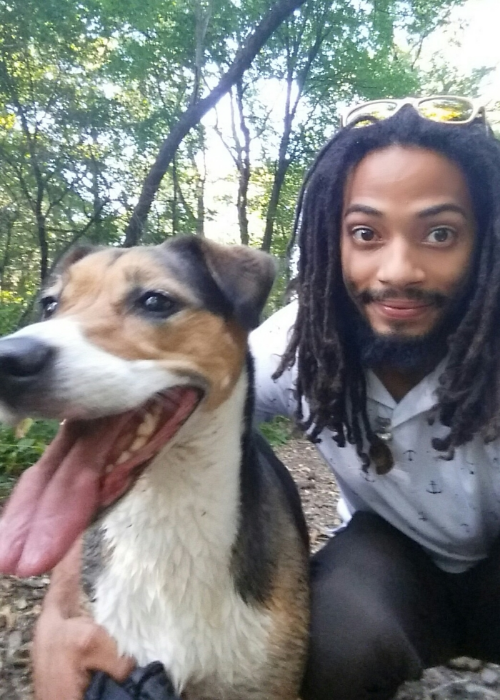
One night as winds were shaking my windows and rain started to punish the ground outside, my dog Zero (she was born on Halloween and is named after the ghost dog from Nightmare Before Christmas) began to whine. She never liked storms, as many dogs don't. But, this was the first time she ever reacted by hiding inside the bathtub.  

Growing up in Tornado Alley, kids learn that if a basement isn't available, find shelter inside a small closet, an inner hallway, and yes, even a bathtub. I could always tell a storm was 10 to 15 minutes out because my furry roommate would scurry away to my bedroom closet or curl up inside the tub. 

Zero's instinct to hide opened my eyes to her true intelleignce. I had to learn proper storm safety but Zero simply knew. Moreover, Zero was obviously feeling fear. She was terrified by the storm, and for all she knew, her life was in danger. This showed me that Zero reacted in a way to preserve her well-being as a  living creature. Her intellect and genuine feelings of fear reflected a humanity that deserved accreditation. But more than that, Zero deserved acknolwedgment as a fellow creature, with a desire for life no more or less zealous than my own.

But it dawned on me, other animals share similiar cognitive abilities and are treated in horrible ways by humanity. Pigs are often compared to dogs in terms of loyalty and intellect, yet we EAT them. Orangutans are often called "the people of the forest" and we ruin their habitats for things like palm oil and cattle raising. The only reason I don't eat my dog is because of cultural norms. In many parts of the world, dog meat is free game. I simply couldn't live with the hypocrisy of slaughtering fellow animals for food, knowing they experience the same fear and the same yearning for life that Zero does. 

That night of shattering cognitive dissonance happened roughly five years ago. I became vegetarian after reflecting on Zero's reaction to stormy weather. After three years, I switched to full-on veganism. My vegan ethos is sustained by many other factors, most notably my work as an environmentalist. Out of every protest, signature gathering, march, or campaign I ever participated in, I find it funny that my diet exceeds all else in terms of environmental impact.

Nonetheless, my dog Zero who barks at her own farts and high fives me for treats, set me on the lifelong path I perhaps was meant for all along. 

Side note: Thank you to Black Vegans Rock for fruitful content and bringing folks together! I no longer feel like an endangered species out here.

If you care to know what happens when an environmentalist reads too much Huey P. Newton, check out my blog Coffee and Purgatory.


Sunday Black Vegan News Roundup


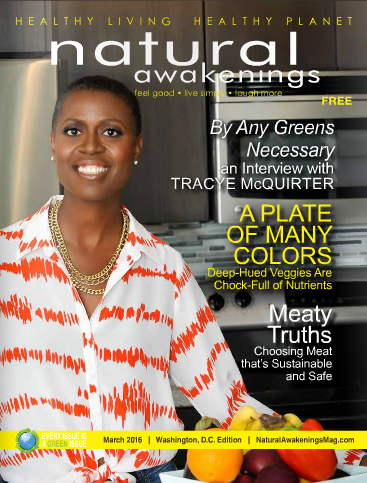
Tracye McQuirter, MPH, Featured on Cover of Natural Awakenings Magazine

Congratulations to Tracye McQuirter! Make sure to check out Natural Awakenings Magazine! Also, Tracye will be speaking on a panel at Natural Products Expo West on March 12th called "Finding Your Company's Future Leaders" about the need for more people of color in leadership positions in the natural products industry. 


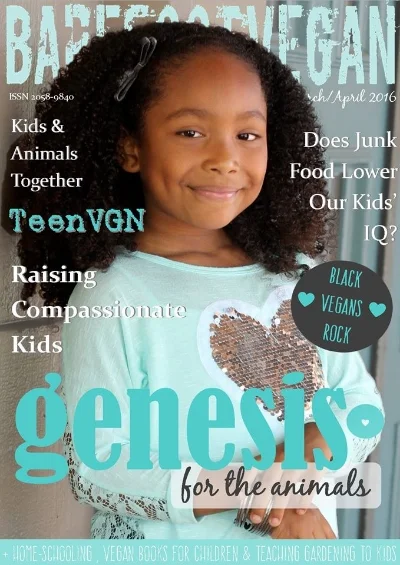
Genesis Butler and Black Vegans Rock Featured in Barefoot Vegan Magazine

Check out the latest issue of Barefoot Vegan Magazine. Genesis Butler is on the cover, and Black Vegans Rock founder, Aph Ko has a special interview that's featured inside!


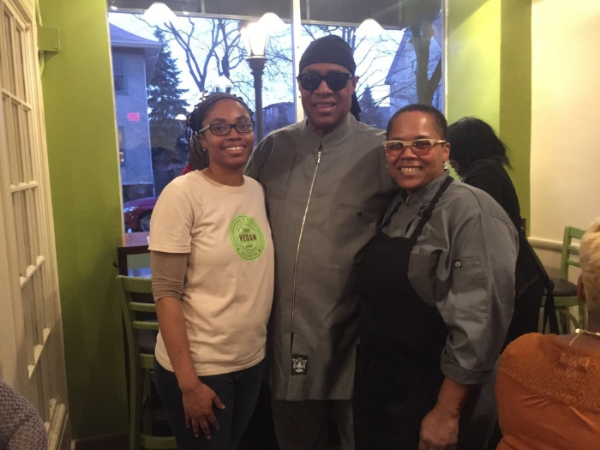
Detroit Vegan Soul Has Some Special Guests

Detroit Vegan Soul, founded by Kristen Ussery and Erika Boyd. had Stevie Wonder stop by their restaurant as well as former president, Bill Clinton. Congrats!! Follow their Facebook page for more updates! 


Dr. Breeze Harper Has New Article on Racism in the Food System

Dr. Breeze Harper helped write a new publication with Dr. Holt-Gimenez. This is the first installment in the new Racism in the Food System series from the Institute for Food and Development Policy, also known as FoodFirst. Check it out HERE


FEATURE: Nathalie Etienne

Hi, my name is Nathalie Etienne and I am a Caribbean-American vegan based in NYC. My vegan journey started during my sophomore year of college in 2012 when I started taking some time out to learn how I could possibly improve my well-being. I wasn't suffering from any illness but I was trying to figure out how I could integrate natural preventative care practices into my daily life. A lot of the information I received were from well studied naturopathic healers, such as Dr. Phil Valentine and Sister Queen Afua.  

After coming into the general realization that food is medicine and food can be healing. I decided that it was time to make a change. I was no longer going to consume meat, dairy, or any other animal products. After about six months I bounced back for a bit and went pescatarian, then vegetarian, until I finally went full on vegan again in the spring of 2014. Ever since then, I never looked back! 

 I started to fall in love with taking the time to prepare healthy delicious WHOLE foods, so much so that I started to blog about it! I created an Instagram page called @DOOSENYC where I feature Caribbean inspired vegan foods and desserts.Taken from the French and Creole word, "douce", which means, "sweet". I wanted to prove to my friends, family and anyone else who is watching that you can still enjoy good cooking and good baking while staying on a plant-based diet. I hope to continue reinventing traditional recipes in hopes of making my vegan experience that much sweeter. Thanks for allowing me to share my story! 

Links: 

Youtube Channel: https://www.youtube.com/channel/UC1S2NDh05QMSCQmS6GFIuIA

Google +: https://plus.google.com/u/0/+DOOSEbyNathalieNYC1/posts

IG: @DooseNYC

Facebook: https://www.facebook.com/Doose-NYC-11... 

Tumblr: http://cococurenat.tumblr.com/

Email: LifeisDoose@gmail.com

FEATURE: Victor

So, I started with veganism when I was 15 years old, a teenager. In the beginning I had no notion of what I could eat. I just ate rice, beans, and soy. My mom was worried about my health, but as the days went on, a huge universe of new possibilities emerged. I started to eat more fruits, more vegetables, more greens, more beans and grains. I also drank different kinds of vegan milks, and veganism became easier to me. 

Some of my friends (from when I was a teenager) tried veganism as well. Some are still vegan today, but others gave up soon after. Some tried veganism 11 years ago, but in Brazil, things like soy milk, seitan, and tofu were basically inaccessible. The vegan market here, over the past 11 years, has grown like it never has before. 

Black people in Brazil are still very much economically inferior to white people. I would argue that it's actually worse here than it is for the black people in the U.S. 

Here, sometimes, we don't have the conditions to buy the basic items for three meals a day, so to start to speak about vegetarianism or veganism is not just an ethical issue with animals...it's also a matter of autonomy and consumption. Veganism is an alternative space for us to escape from this poisonous market that advertises poor health and expensive products.

I think veganism is a form of empowerment for the majority of the black population here. We can start to live better and more empowered. People have no power if they don't have autonomy in their kitchens.

So, friends, let's be more courageous to drive veganism as a revolutionary way of the world, a world that's more peaceful and powerful, with life, without the submission of non-humans, and without the submission of our people in front of a non-healthy and expensive food industry. 

Veganism is the best choice I've made in my whole life. 

Personal Facebook: https://www.facebook.com/victor.garofano


FEATURE: Nana Kwaku Opare MD, MPH, CA and Ama Opare MA

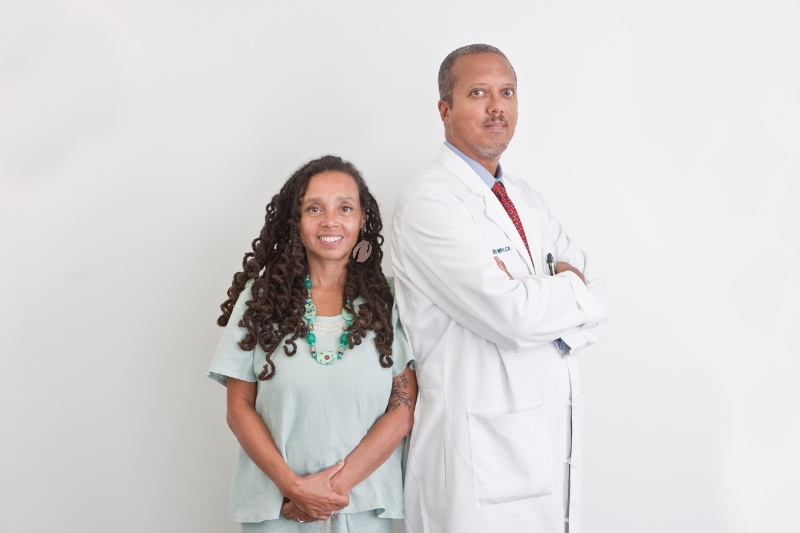
Nana Kwaku Opare MD, MPH, CA and Ama Opare MA are, published authors, educators and public speakers and co-owners of the Opare Institute and the wide-ranging website Food for the Soul — the online home for Black vegetarians, which is dedicated to helping end the epidemic of “food borne illnesses” that are plaguing our community. They have dedicated their life’s work to help people heal and prevent chronic diseases with a vegan and raw food lifestyle.

When Ama and Nana Kwaku met as youth in the Hyde Park area of Chicago 70s, among many similarities, they shared upbringings were they were encouraged to question convention and fight for justice.

Inspired by his adolescent desire to actually help people be healthy and not just manage their disease, Nana Kwaku moved to Berkeley and completed his professional training in food/nutrition/dietetics, public health, and medicine. He saw the dehumanizing hypocrisy and iatrogenic nature of standard allopathic medicine with its heavy reliance on drugs and surgery. Fed up, he sought out non-harmful and natural treatment alternatives going on to complete professional training in acupuncture and traditional Chinese medicine and later osteopathic manual medicine.

During early 80’s, motivated by the ubiquitous food borne (caused) illness in his family, determined not to succumb himself and, informed by his education, Opare began a slow transition towards a plant-based/vegan diet. He has been a strict dietary vegan, and for years at a time raw vegan, for 20 years. He credits primarily his pattern of food consumption for his excellent health.

Over the past three decades Nana Kwaku has had dual and eventually integrated practices in allopathic and alternative medicine. He terms his philosophy of medicine as Afrikan Natural hygiene. He believes the only rational way to approach a health challenge is to first and foremost clearly identify the cause of the problem and permanently remove it. He asserts that following what he entitled his book ones “Rule Book And User Guide For Healthy Living” will then create the environment where healing occurs.

Meanwhile, Ama had moved to Michigan and undertook studying education. However, she came to think that she wasn’t very smart. She always had problems focusing on the work she was supposed to do.

That all changed when Ama had her first child. Suddenly those very same texts she hated were interesting because they were important to her life. Ama’s self directed learning led her to devour a wide range of texts, subjects and experiences. And, she discovered that she was indeed highly intelligent and a deep thinker.

This discovery shaped Ama’s philosophy of education. She began to focus on putting the learner at the center of the process. What would happen if the student was the one to decide what was most important to focus on? How could the teacher guide and facilitate this process?

Ama watched her own children and her students flourish the same way she did. The learning was deep and real and made a difference in their lives.

In 2006, Ama was 49 years old, divorced, overweight, worried about her health, and eating the Standard American Diet (SAD). She had spent years as a vegetarian-wanna-be.

She felt out of control, unable to stop eating sugar, fast food and processed food. She couldn’t keep her weight under control. She was afraid she was headed for the same fate as her family; diabetes, high blood pressure or cancer.

She knew she should be eating better but didn’t know how to make it work. She tried to figure it out by herself, but ended up more confused than ever. Her diet got worse over the years and so did her health.

In  2007 Ama and Nana Kwaku reconnected. With Nana Kwaku’s help, Ama was finally able to make the diet and lifestyle changes she’d been longing to make. She became skilled at creating delicious vegan and raw dishes, and published a recipe book called “Food For The Soul From Ama’s Kitchen”. They were affirmed by each other’s intact sense of righteousness and fairness and soon married. They went on to found the Opare Institute in 2009.

Opare Institute was formed to teach people how to permanently end their struggles with their diet and their health. It combines Nana Kwaku’s decades of experience as a dietitian and physician and his perspectives on health and healing with Ama’s philosophy of education and 30 years of experience as an educator and curriculum developer.

Choosing a plant-based or vegan lifestyle is a revolutionary decision. They recognized that in order to address the reason why people fail, they needed to help people make a paradigm shift. Revolution requires new skills, and new tools.

All Opare programs are based on the Four Pillars of Success.

Pillar #1 Deep Self Understanding- Explore your inner emotional and psychological framework for your behaviors. Without this awareness you won’t understand why you do what you do, or how to change that framework to one that works.

Pillar #2 Common Sense Nutrition Education

Understand what your body really needs and cut through the confusing, conflicting information you hear and see all around you allows you to relax and stop worrying.

Pillar #3 Kitchen Mastery

Eating healthy doesn’t mean boring, tasteless food. It does mean you’ll need to upgrade your kitchen skills to learn the skills, tricks and recipes of the vegan kitchen and become a healthy gourmet in your own kitchen.

Pillar #4 Real World Navigation Skills

Few of us don’t have to navigate in non-vegan spaces. You need an effective plan for how to stay committed in these situations that addresses your needs based on the awareness you gained in Pillar #1.

With these tools you have the power and the freedom to create a sustainable healthy lifestyle that fits your schedule, your budget, and your goals.

Links

You can find Nana Kwaku Opare, MD and Ama Opare at www.opare.net

.For recipes and inspiration go to www.foodforthesoul.opare.net

For online courses go to www.opare.net/training

For their publications visit www.opare.net/store

 Facebook at https://www.facebook.com/OpareHealthCare/

 Twitter @OpareHealthCare

YouTube: https://www.youtube.com/user/oparehealthcare,  

Instagram @foodforthesoul.opare,

 Pinterest: https://www.pinterest.com/blackvegetarian/

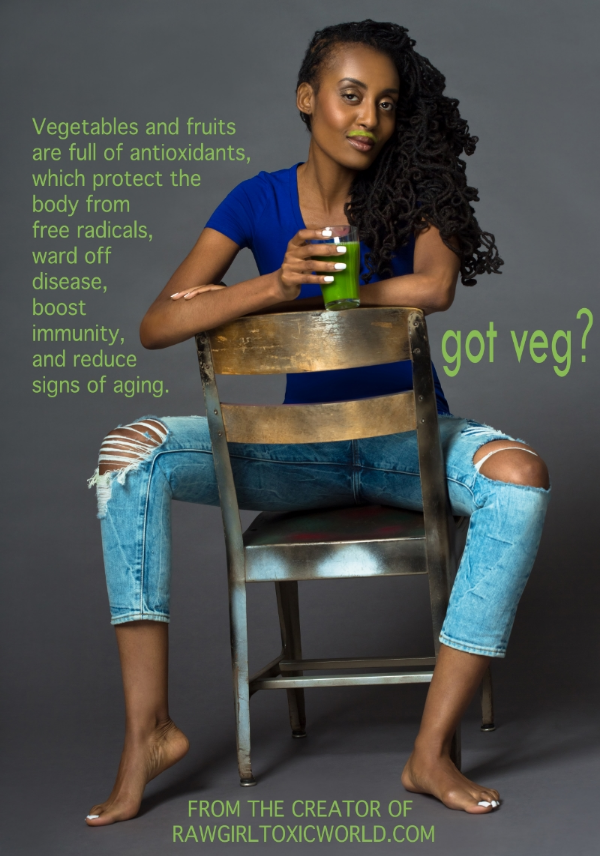
FEATURE: Esosa E. (aka "RAW GIRL")

My adventure as a vegan started out as an informal student of health trying to absorb all I could about plant-based living to become the best version of me. That process has surprisingly led to me now serving as a teacher or guide for others who are looking for inspiration on their own paths to optimal health. 

It's been almost fifteen years since I first decided to cut out all meat and animal products from my diet. At the time, I just didn't like the way I felt eating meat and I was also lactose intolerant. While in college I was still vegan but eating a lot of junk food and getting sick a lot. I had a cousin who was a raw foodist who inspired me to consider going raw. Years later, my skin started to break out horribly and my energy was at an all time low. I remembered the raw vegan diet, and also started to learn a lot informally about holistic health from the Rastafarians and healers in my hood in Brooklyn.

I was able to completely heal myself of acne within a month and continued on with a vegan, but very high raw diet. When I moved from New York to DC, people constantly stopped to ask me about what I was eating or the health products I was using, so I decided to start a blog called Raw Girl in a Toxic World. The blog allowed me to share all of the remedies and new therapies I was reading about or trying on my own. From there, I started writing books. My first book is called The Acne-Free Diet, and it includes my journey, a detox plan, and how to heal acne for life from the inside out without pills, lotions, and acne potions that doctors generally prescribe. My latest book, Got Veg? How to Thrive on a Plant-Based Diet, is available on Amazon, iBooks, Barnes & Nobles and more. I wrote it to help anyone understand the basics of a plant-based diet, and the various levels they can aspire to. It focuses on nutrients your body needs to function at its best that people usually don't mention to plant-eaters and also includes how to transition, set up a veg kitchen, and some recipes to get people started. 

As a black vegan, I am excited to see awareness grown within our communities about health. More people need to understand that the myth that black people do not like healthy food is something that isn't true. The more we educate people about how food affects their spiritual vibration, their thoughts, actions, and eventually destiny, the more willing they will be to try something new. Part of what I am here to do is inspire people to make healthy choices and I intend to continue doing so far as long as I can.

Social Media Links

Blog: http://rawgirltoxicworld.com/

Instagram: https://www.instagram.com/therawgirl/

Facebook: https://www.facebook.com/TheRawGirl

Twitter: https://twitter.com/TheRawGirl

You can also find Esosa here:

Website: www.esosae.com

Personal Instagram: www.instagram.com/officialesosae

Personal Twitter: www.twitter.com/EsosaE

Facebook: www.facebook.com/EsosaUpdates